
Follow us on:
Effects of Screen Time on Children: Impact on Brain, Behavior, and Health


Introduction
Are you wondering how about effects of screen time on children? Kids today grow up with screens all around them. Phones, tablets, and TVs are part of daily life. Many children start using screens before they can walk.
But how much is too much? And what does it do to kids? This article from Unkeyme.com looks at the facts. We will cover effects on the brain, behavior, and health. We will also share simple tips to help your child stay healthy in a digital world.
What Is Screen Time?
Screen time is any time a child spends looking at a screen. This includes TV, video games, social media, and apps. Not all screen time is the same. Some types can help kids learn. Others can cause harm. The key is how long kids spend on screens and what they see.
How Much Screen Time Do Kids Get?
Most kids today spend a lot of time on screens. In the US, kids aged 8 to 12 spend about 4 to 6 hours on screens each day. Teens can spend up to 9 hours a day. That is more time than they spend sleeping or in school.
In Indonesia, screen use is also rising fast. More families now own smartphones. Kids start using them at a very young age. The COVID-19 pandemic made this worse. Remote school meant even more hours on screens each day.
How Screen Time Affects the Brain
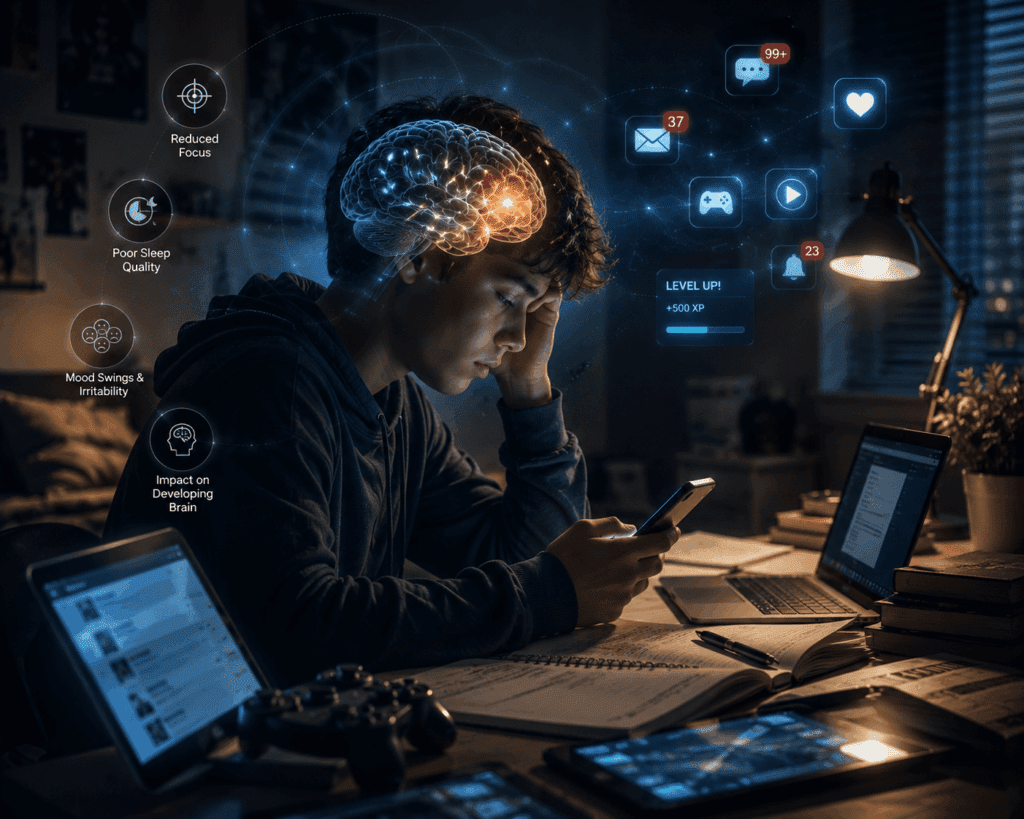
The brain grows fast in early childhood. Kids learn by touching things, moving, and talking with others. Too much screen time can block this natural growth.
Young Children: Ages 0 to 5
The first five years of life are critical for brain growth. Real-world play and face-to-face talk help build strong brain links.
Research shows that kids who watch more screens at age 2 score lower on brain tests by age 5. Their brains may also have weaker white matter. White matter helps the brain send signals fast.
Babies and toddlers learn to talk by hearing real people. A screen cannot respond the way a parent can. It cannot read your child’s face or reply to their needs.
Fast and flashy videos are also a problem. They train the brain to want constant change. This makes it hard to focus on slow tasks like reading or listening in class.
Older Kids and Teens: Ages 6 to 17
The brain keeps growing through the teen years. The front part of the brain helps with focus, choices, and self-control. This part is still forming, so it needs care.
A large US study scanned the brains of many children. Kids who used screens more than 7 hours a day had a thinner brain cortex. This is the part linked to thinking and attention.
Social media and games are also built to hook the brain. Each like, win, or alert releases a chemical called dopamine. This makes us feel good. Over time, kids can become hooked on this feeling. They may find it very hard to stop using screens.
How Screen Time Affects Behavior
Attention and Focus
Too much screen time makes it hard to pay attention. Fast videos train the brain to want new things all the time. Sitting still in class then feels boring and hard.
Research links high screen time with more attention problems. Kids may find it hard to finish tasks. They may give up quickly when things get tough.
Emotions and Anger
Some kids get very upset when screens are taken away. They may cry, yell, or throw a fit. This is sometimes called screen rage. It shows that the child relies too much on screens.
Violent games and videos can also raise aggression. Kids who see a lot of violence may become more reactive. They may have trouble handling frustration. When this happens, how you respond as a parent matters. Our article on positive discipline vs punishment explains the best ways to guide your child without making things worse.
Social Skills and Empathy
Kids learn empathy by spending time with real people. They learn to read faces, tone of voice, and body language. Screens cannot teach these skills well.
One study found that kids who went 5 days without screens got much better at reading emotions. This shows how fast real-world skills can grow.
Heavy social media use can also hurt real friendships. Kids compare themselves to others online. They may feel left out or not good enough. This can hurt their confidence and self-image.
School Performance
Too much screen time is linked to lower grades. Social media and videos take time away from study. They also reduce memory and focus.
Research shows that even a phone on your desk can hurt your thinking. The brain uses energy to resist checking it. This leaves less mental power for learning.
How Screen Time Affects Physical Health
Sleep Problems
Screens make it hard to sleep. Blue light from phones blocks melatonin. Melatonin is the hormone that helps you fall asleep.
Using screens before bed keeps the brain awake. Exciting games and videos are hard to wind down from. Alerts and messages can also wake kids up at night.
Kids aged 6 to 12 need 9 to 12 hours of sleep each night. Teens need 8 to 10 hours. Not enough sleep makes all the effects of screen time worse. It also hurts mood, memory, and health.
Eye Strain and Poor Vision
More kids today are nearsighted. This means they can see close things but not far ones. Screen time is one key cause of this trend.
Looking at a close screen for a long time stresses the eyes. Kids may get headaches, blurry vision, or dry eyes. This is called digital eye strain.
A simple tip is the 20-20-20 rule. Every 20 minutes, look at something 20 feet away for 20 seconds. This gives the eyes a break.
Spending time outdoors also helps. Natural light supports healthy eye growth in kids.
Weight Gain and Less Activity
Sitting in front of a screen means not moving. Kids need at least 60 minutes of active play each day. Screen time often takes up this time.
Watching screens also leads to more snacking. Many food ads shown on screens are for unhealthy foods. Kids may eat more without noticing.
Over time, this can lead to weight gain. It also raises the risk of heart disease and diabetes later in life.
Mental Health
Too much screen time is linked to more anxiety and sadness. This is most common with heavy social media use. Girls tend to be more affected than boys.
On social media, people only show their best moments. Kids may feel they are not as happy, pretty, or popular as their peers. This lowers self-esteem.
Cyberbullying is also a real problem. Mean messages online can cause deep pain. Many kids are afraid to tell adults about it.
But not all screen use is bad for mental health. Video calls with loved ones can reduce loneliness. Online groups can help kids with special needs feel less alone. The type of content and how it is used matters a lot.
The Benefits of Screen Time
Not all screen time is harmful. Used well, screens can help kids learn and connect.
Good apps can teach reading, math, and science in fun ways. Shows like Sesame Street have been shown to build language skills in young kids. Coding games teach kids to think and solve problems step by step.
Screens can also connect kids with family who live far away. Video calls help grandparents and cousins stay close. This kind of screen use is healthy and good.
The key is to stay active and engaged. Talk with your child about what they watch. Watch together when you can. Ask questions and make it a shared activity.
Screen Time Guidelines for Children
The American Academy of Pediatrics gives these simple rules.
| AAP Recommended Screen Time by Age• Under 18 months — No screens at all. Video calls are the one exception.• Ages 2 to 5 — No more than 1 hour a day. Choose good content. Watch with your child.• Ages 6 and up — Set clear limits. Screens should not replace sleep, play, or family time. These are guides, not strict rules. Every child is different. The goal is balance, not perfection. |
Tips for Parents
Here are simple steps to help your child use screens in a healthy way.
1. Keep screens out of bedrooms. This protects sleep and limits late-night use.
2. Set screen-free times. Meals and family time should be free of screens.
3. Watch content together. Ask your child questions about what they see.
4. Make a simple media plan. Agree on how much screen time is okay each day. The Unkeyme app — available on App Store and Google Play — can help you track and limit your child’s screen use with ease.
5. Be a good role model. Put your own phone down. Kids copy what they see.
6. Push for outdoor play. Active time is great for both the brain and body.
7. Talk about online safety. Teach your child about privacy. Tell them what to do if they see something bad.
8. Choose good content. Look for apps and shows that teach real skills and values.
Conclusion
Screen time is now a big part of growing up. It is not going away. But too much of it can harm kids’ brains, behavior, and health.
The good news is that parents can make a real difference. Simple rules and open talks about screens can protect your child. What kids watch matters as much as how long they watch it.
Help your child build good screen habits now. These habits will serve them well for life. A healthy balance today means a stronger, smarter child tomorrow.