
Follow us on:
Positive Discipline vs Punishment: Key Differences and Which is Better for Children

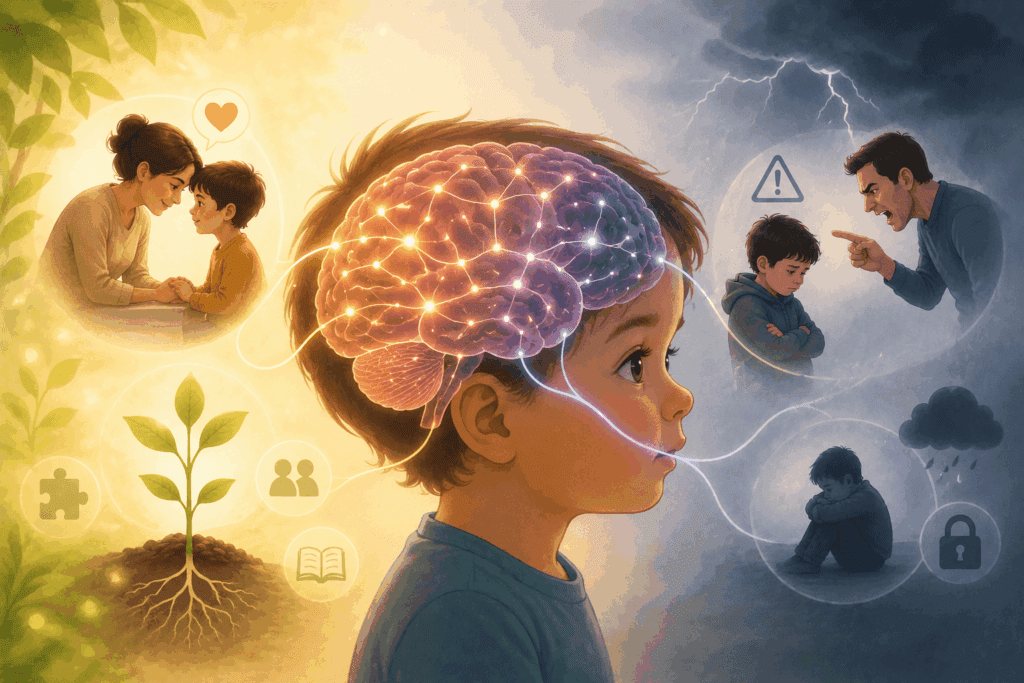
Positive Discipline vs Punishment: The Definitive Parent’s Guide
Every parent wants to raise a child who is kind, responsible, and capable. However, the path to getting there is often debated. For decades, “punishment” was the standard tool for behavior. Today, “positive discipline” has emerged as a more effective, research-backed alternative.
While they may look similar on the surface, they are worlds apart in their impact on a child’s brain and future. This guide explores those differences in detail.
1. Defining the Core Philosophies
To understand the shift, we must look at what the adult wants to achieve during the interaction.
The Reactive Nature of Punishment
Punishment is a penalty. It is a reactive measure, meaning it happens after a mistake occurs. The goal is to cause enough discomfort, whether physical, emotional, or social, so the child avoids the behavior in the future.
The core message of punishment is: “You did something bad, so I will make you feel bad.” It relies on fear to gain compliance. While fear can stop a behavior in the moment, it rarely teaches the child what to do differently next time.
The Proactive Nature of Positive Discipline
Positive discipline is an “educative” model. It views misbehavior as a “skill gap.” For example, if a child hits, they may not yet have the skills to handle frustration. This method seeks to fill that gap by teaching new skills.
The core message is: “You are struggling with this choice; I will help you learn a better way.” It is proactive. It sets up the child for success before the mistake even happens.
2. The Impact on the Developing Brain
A child’s brain is a work in progress. Their behavior often reflects which part of their brain is currently in control.
The Fear Response (Punishment)
When a child is yelled at or shamed, the amygdala (the brain’s alarm system) takes over. This triggers a “fight, flight, or freeze” response. When the brain is in survival mode, the prefrontal cortex, the part responsible for logic and reasoning, shuts down.
Because the “thinking brain” is offline during punishment, the child cannot process the lesson. They may stop the behavior, but it is out of fear, not understanding. This leads to short-term obedience but long-term confusion.
The Safety Response (Positive Discipline)
Positive discipline prioritizes “Connection Before Correction.” When a child feels safe and respected, their prefrontal cortex stays “online.” This allows them to hear your reasoning, understand how their actions hurt others, and store that information for future use.
3. The 4 R’s of Logical Consequences
A common myth is that positive discipline is “permissive” or has no rules. In reality, it uses firm boundaries called Logical Consequences. To make sure a consequence is a teaching tool and not a punishment, it must follow these four rules:
- Related: The consequence must link to the behavior. If a child makes a mess, they help clean it up. Taking away a toy for a spilled drink is an unrelated punishment.
- Respectful: There is no shaming or mean language. The focus stays on the action, not the child’s character.
- Reasonable: The task must fit the child’s age. A toddler can help pick up three blocks, but they cannot clean a whole room alone.
- Revealed in Advance: Tell the child the rules before they are broken. This helps them understand that their choices lead to specific outcomes.
4. Practical Strategies for the Home
Transitioning to this style of parenting takes practice. Here are three tools you can use immediately.
Modeling Emotional Regulation
Children are social mimics. They closely observe how you respond to stress and anger, and they learn from your reactions. If you raise your voice when you feel overwhelmed, they begin to understand yelling as a way to handle problems.
A more effective approach is to model emotional regulation. When you feel your temper rising, use a “Time-In” for yourself by calmly saying that you feel frustrated and need a moment to take deep breaths before continuing the conversation.
The Power of Choice
Many power struggles happen because children want to feel a sense of control. When they are not given that space, they may resist or push back, even over small things.
A helpful strategy is to offer “limited choices.” Instead of saying “Put your toys away,” you can ask whether they would like to pick up the cars first or the blocks first, which gives them a sense of agency while still meeting your goal.
Natural Consequences
Sometimes, the world can teach lessons more effectively than any lecture. When children experience the natural outcomes of their actions, the learning feels real and meaningful.
For example, if a child refuses to eat dinner, the natural consequence may be feeling hungry later. As long as they are safe, allowing them to experience these outcomes helps build resilience and a clear understanding of cause and effect.
5. Long-Term Outcomes: Character vs. Compliance
The true test of a discipline style is not how a child behaves at age 5, but how they act at age 25.
The Cost of Punishment
Children raised with fear-based rules often develop the “Four R’s of Punishment”:
- Resentment: “This isn’t fair. I can’t trust my parents.”
- Rebellion: “I’ll do the opposite of what they say just to show them.”
- Revenge: “They hurt me, so I’ll hurt them.”
- Retreat: This leads to Sneakiness (“I won’t get caught next time”) or Low Self-Esteem (“I am a bad person”).
The Gain of Positive Discipline
These children develop Internal Motivation. They choose to do the right thing because they understand why it matters. They become adults who are better at solving problems and managing their own emotions.
6. Why Punishment Fails the “Influence Test”
Research from the American Academy of Pediatrics shows that punishment often backfires as children grow.
- It Models Aggression: It teaches that “might makes right.”
- It Breaks the Bridge: Once a child becomes a teenager, they no longer fear your physical size. If you haven’t built a relationship of respect, you lose your influence exactly when they need it most.
- It is External: Punished kids look for a “boss” to tell them what to do. Disciplined kids look for the “right thing” to do.
7. Positive Discipline in Schools
Modern classrooms are also moving away from “shame-based” systems like color charts or names on the board.
The Class Meeting
In these rooms, students help solve problems. If the hallway is too loud, the teacher asks the class: “How can we solve the noise problem so we don’t wake up the kindergarteners?” When students help make the rules, they are much more likely to follow them.
The “Positive Time-Out”
Unlike a traditional “naughty chair,” this is a “Cool Down Spot.” It is a quiet place where a child can go to regain their calm. It is a tool for the child, not a penalty from the teacher.
8. Common Challenges for Parents
Switching to positive discipline is a marathon, not a sprint. It requires being “Kind and Firm” at the same time.
- The “Immediate Result” Trap: Punishment works fast because fear is a strong motivator. You must remind yourself that you are building a human being, not just stopping a noise in the kitchen.
- The “Permissiveness” Myth: Positive discipline is not about letting kids do whatever they want. It is about holding a boundary while validating the child’s feelings. You can say: “I see you are sad that we have to leave the park, but it is time to go.”
9. Creating a Nurturing Environment
To make these strategies work, the overall “climate” of the home must be supportive.
- Routine: Children feel safe when they know what is coming next.
- Encouragement: Notice when they do well. Instead of “Good job,” try “I noticed how hard you worked on that puzzle.”
- Family Meetings: Talk about problems when everyone is calm, not in the heat of the moment.

Conclusion: Raising a Self-Regulated Adult
The ultimate goal of parenting is to raise an adult who can manage their own life. Punishment may create adults who avoid trouble, but positive discipline shapes adults who are helpful and empathetic. If you need extra guidance, you can find support here, or continue learning through the app on the App Store or Google Play whenever you need it.
By focusing on teaching instead of penalizing, you respect your child’s humanity. You give them the tools they need for a lifetime of healthy relationships. Remember: “Children do better when they feel better.” A kind, consistent home doesn’t just fix behavior, it helps a child thrive.
FAQs (Frequently Asked Questions)
What is the difference between positive discipline and punishment in child behavior management?
Positive discipline is a proactive and respectful approach that focuses on guiding children through understanding and natural consequences, while punishment relies on fear-based control and reactive measures to suppress unwanted behavior.
How does punishment negatively affect children’s development?
Punishment can lead to negative outcomes such as rebelliousness, avoidance, lowered self-esteem, power struggles, fear, resentment, and even academic decline due to its reactive nature and use of unrelated penalties.
What role do natural and logical consequences play in positive discipline?
Natural and logical consequences in positive discipline help children learn responsibility by allowing them to experience the direct results of their actions, fostering an understanding of cause-and-effect relationships.
What practical strategies are used in positive discipline approaches?
Practical strategies include adults modeling desired behaviors, setting clear boundaries and expectations consistently, and using proactive guidance to encourage appropriate behavior.
Why is positive discipline considered more effective than punishment according to research?
Research indicates that physical punishment is ineffective for lasting behavioral change and may cause harm, whereas positive discipline fosters intrinsic motivation and promotes healthier developmental growth.
How can parents and teachers consistently implement positive discipline techniques at home and school?
Parents and educators can adopt positive discipline by applying consistent boundaries, modeling respectful behavior, using natural consequences thoughtfully, and maintaining open communication to guide children proactively.