
Follow us on:
How to Help a Shy Child Without Pushing Too Hard

The Comprehensive Guide to Supporting the Shy Child
How to help a shy child starts with understanding that shyness is not a lack of social skill, but often a sign of a naturally cautious temperament. Many children simply need more time to feel safe and comfortable before engaging fully with others. This “slow-to-warm-up” approach is actually a protective instinct, helping them assess their environment before participating. By respecting this pace, parents can support healthy development and build genuine confidence, rather than pushing children into forced or uncomfortable interactions.
I. The Anatomy of Shyness: Biology and Temperament
To help a shy child, we must first understand that their brain is wired a bit differently. Research suggests that shy children often have a more reactive amygdala, the brain’s “alarm system.”
The “High-Reactive” Brain
In a “high-reactive” child, new stimuli (a loud classroom, a new face, a birthday party) trigger a stronger physical response. Their heart rate may increase, and their “fight or flight” system may activate.
- The Spectator Phase: This is not a lack of interest. It is a data-gathering phase. The child is scanning the room to see who is kind, where the exits are, and what the “social rules” of the space look like.
- The Cost of Pushing: When we push these children into the center of the room, we bypass their safety checks. This can lead to a “freeze” response, which reinforces the idea that social situations are dangerous.
II. The Five Pillars of Social-Emotional Nurturing
Supporting a shy child falls under the broader umbrella of Social-Emotional Learning (SEL). By focusing on these five areas, you provide the child with the tools to manage their own temperament.
1. Self-Awareness: Identifying the “Flutter”
Shy children often experience physical discomfort but may not have the words to explain how they feel. In these moments, it helps to gently guide them by naming the feeling for them, such as saying that their tummy feels a little fluttery because there are many new people around, and reassuring them that this is simply their body’s way of telling them to take things slowly.
2. Self-Management: The Toolkit for Calm
Once children begin to recognize the “flutter” feeling, they need simple ways to calm their nervous system and return to a steady state. You can support this by teaching “low-profile” regulation techniques, such as taking deep belly breaths or quietly squeezing a small fidget in their pocket. These methods help them feel calmer without drawing attention, which is often what they fear most.
3. Social Awareness: Reading the Room
Shy children are naturally observant, but they often focus more on what feels like a “threat.” You can help by gently redirecting their attention to something safe and familiar, such as pointing out another child who is calmly playing with blocks and noting that they are doing something similar to what your child enjoys at home. This helps shift their focus from fear to comfort and connection.
4. Relationship Skills: The One-on-One Approach
Large groups can feel overwhelming for shy children, while smaller interactions are much easier to handle. You can support them by arranging “micro-playdates,” such as inviting one calm peer to your home, which serves as a safe and familiar environment. This setting allows your child to practice sharing and communication at their own pace without the pressure and noise of a larger group.
5. Responsible Decision-Making: Giving Choice
Shyness often comes from feeling overwhelmed and not in control of a situation. To support your child, offer simple participation choices, such as asking whether they would like to sit on your lap or sit in their own chair nearby. This gives them a sense of control while still gently encouraging them to engage.
III. The Step Ladder Engagement Method: A Deeper Look
The Step Ladder Method is a form of “exposure therapy” that is gentle and child-led. It breaks the terrifying “mountain” of social interaction into small, climbable rungs.
Rung 1: Safe Observation (The Home Base)
The child stays in the room without any pressure to interact with others. The goal is to help them slowly get used to the noise and movement around them. As a parent, act as a “safe harbor” by allowing them to stay close if needed, as your calm presence reassures their brain that they are safe.
Rung 2: Parallel Proximity
The child plays close to the group but does not directly interact with them. The goal is to help them feel comfortable being physically near other children. As a parent, you can support this by offering “parallel tools,” such as giving them their own set of materials to use nearby, so they can engage at their own pace.
Rung 3: The “Non-Verbal” Contribution
The child begins to interact through objects or simple actions rather than using words. The goal is to help them experience the small “win” of participating without the pressure to speak. As a parent, you can support this by giving them a simple “helper role,” such as carrying a basket or holding a door, so they can be seen and involved in a structured, positive way.
Rung 4: Low-Stakes Verbalization
The child begins to respond with a one-word answer or a simple, practiced greeting. The goal is to help them overcome the “speech block” in a low-pressure way. As a parent, you can support this by asking closed-ended questions, such as offering two choices, which makes it easier for them to respond without feeling overwhelmed.
IV. Language That Empowers vs. Language That Labels
The way we talk about a child’s shyness becomes their internal monologue.
The “Label” Trap
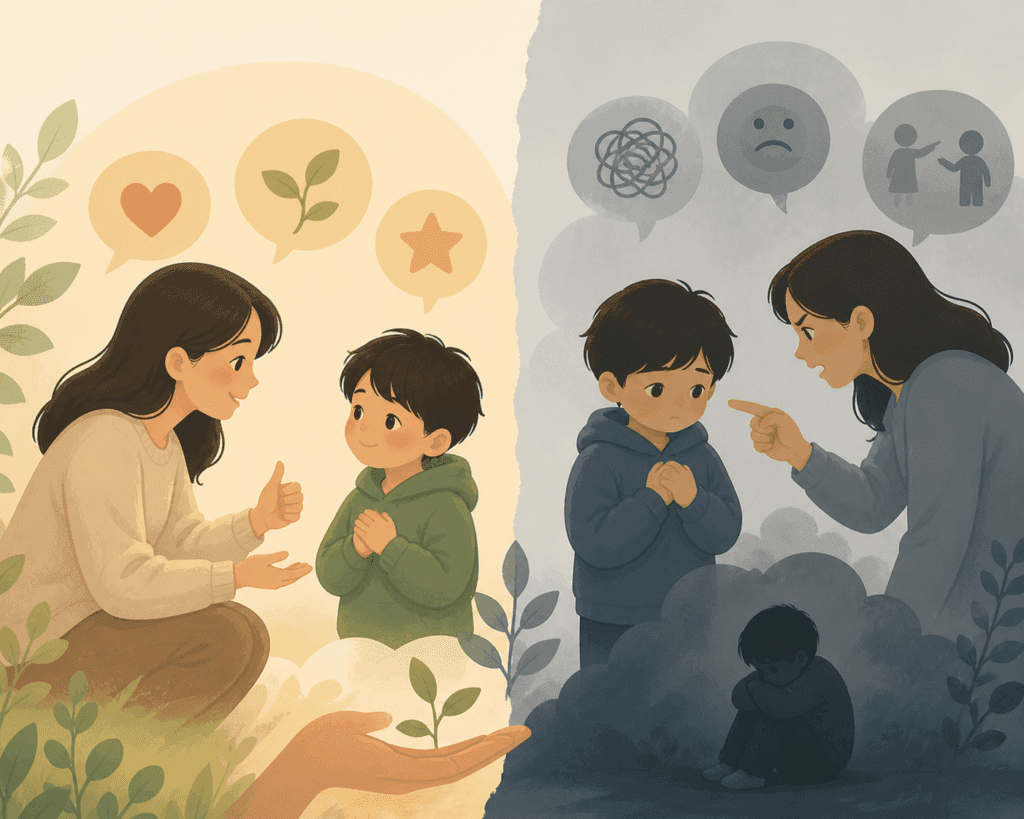
When a parent says, “Oh, she’s just shy,” to a stranger, the child may internalize it as a fixed part of who they are. Instead, you can reframe it in a more empowering way by describing them as a thoughtful observer who likes to understand situations before joining in. This shifts the focus from fear to strength and helps the child see their behavior in a more positive light.
Validating the Effort
Instead of praising the outcome, such as saying you’re glad they finally played, focus on praising their bravery. You can point out the effort by saying you noticed them taking a deep breath before joining the sandbox and acknowledge that it took courage. This helps them feel proud of how they handled their “fluttery” feelings, not just the result.
V. The Role of Peer Support: The “Calm Buddy”
Children learn best from other children. In a classroom or playgroup setting, the “Buddy System” is transformative.
- The Pairing: Look for a peer who is “pro-social” but not overbearing. A very loud, high-energy “leader” might actually overwhelm a shy child.
- The Task: Give the two children a shared goal. “Could you two help me find all the yellow blocks?” Shared goals bypass the need for “small talk,” which is often the hardest part of socializing for a reserved child.
VI. When Shyness Crosses the Line: Knowing When to Act
It is vital to distinguish between a “slow-to-warm” temperament and Social Anxiety or Selective Mutism.
Indicators for Professional Support:
- Duration: The “warm-up” period doesn’t end. Even after six months in the same classroom, the child is still in high distress.
- Physical Regression: The child stops eating, stops using the bathroom, or experiences significant sleep disturbances due to social dread.
- Intensity: The child experiences “meltdowns” rather than just “shutdowns.”
- Selective Mutism: The child speaks fluently at home but is physically unable to produce sound in public settings for more than a month.
Who to call: A pediatric consultation is the first step. They can check for sensory processing issues (where the world literally feels “too loud” or “too bright”) or refer you to a play therapist who specializes in childhood anxiety.
VII. Supporting the Caregiver: You Are the Anchor
Parenting a shy child can be exhausting and, at times, embarrassing. You might feel judged by other parents when your child refuses to join the “Happy Birthday” song.
- Release the Guilt: Your child’s shyness is not a reflection of your parenting. It is a biological trait, like eye color or height.
- The “Anchor” Mindset: Your job is to stay emotionally neutral. If you get anxious because they are shy, they will pick up on your anxiety, confirming their fear that the situation is “bad.”
- Practice Self-Compassion: Some days the “ladder” will be easy to climb. Other days, your child will need to stay on the ground floor. Both days are okay.

VIII. Conclusion: The Long-Term Vision
The goal of this low-pressure approach is not to turn a shy child into the “life of the party,” but to respect their natural personality while building their sense of capability, and if parents need extra guidance, they can always find support here. What truly matters is helping children feel effective, so they learn that even if they feel nervous, they have tools to manage it. They can observe, take a breath, and join in when they feel ready, at their own pace, while parents can also continue learning through the app on the App Store or Google Play.
When a shy child is allowed to grow this way, the confidence they develop is deep and lasting. They often become thoughtful, observant, and resilient individuals. By trusting the process and honoring their timing, you are not just helping them through a moment, you are teaching them how to face the world with courage and self-awareness. Every time you patiently wait while they observe, you are sending a powerful message: you trust them, you trust their instincts, and you will be there when they are ready.
FAQs (Frequently Asked Questions)
What are common signs and causes of shyness in children?
Shyness in children often manifests as social withdrawal, watching rather than joining in, staying close to trusted adults, soft or no speech, avoiding eye contact, refusing activities, and crying during transitions. Causes include natural temperament, sensory sensitivities like loud noises or crowds, past embarrassing experiences, and language barriers especially for dual-language learners.
Why is a gentle and supportive approach important when helping a shy child?
Pushing a shy child too hard can be counterproductive. A gentle approach with small safe steps encourages gradual engagement and builds trust. Celebrating small progress boosts their confidence and helps them feel secure as they navigate social situations at their own pace.
What is the Gradual Step Ladder Engagement Method for supporting shy children?
The Gradual Step Ladder Engagement Method involves increasing a child’s participation in social situations step-by-step, from watching to brief involvement to longer periods, often using props or small tasks to ease comfort. This gradual participation respects the child’s pace and reduces anxiety around social interaction.
How can parents use language effectively to encourage shy children without pressuring them?
Using warm and encouraging phrases like “You can watch first,” “When you’re ready,” or “I’ll stay close” supports a shy child gently. Avoiding pressuring statements such as “Don’t be shy” or “Everyone is waiting” prevents added anxiety and respects the child’s comfort level during social participation.
What practical strategies help create a calm environment for shy children?
Creating a calm and predictable environment includes using visual schedules to reduce anxiety, offering shorter group times especially for younger kids, providing quiet cozy spots for breaks, and giving choices in how they participate. These strategies help shy children feel safe and more willing to engage socially.
When should parents consider seeking professional support for their shy child?
Professional support may be needed if a child’s shyness leads to prolonged withdrawal or distress that affects eating, playing, resting, or communication. Signs of significant impact on daily life warrant consulting specialists to provide appropriate interventions tailored to the child’s needs.