
Follow us on:
Can Screen Time Cause Speech Delay in Toddlers?

Can screen time cause speech delay in toddlers? Many parents are asking this question right now. Your toddler is at the age when they should be talking. But the words are not coming. Or they come slowly. You wonder what is going on.
Phones, tablets, and TVs are now part of daily life for most families. But for young children, too much screen time may slow down how they learn to talk.
This article, published on Unkeyme.com, looks at the link between screen time and speech delay in toddlers. We will explain what speech delay is, how screens affect language growth, and what parents can do to help their child find their voice.
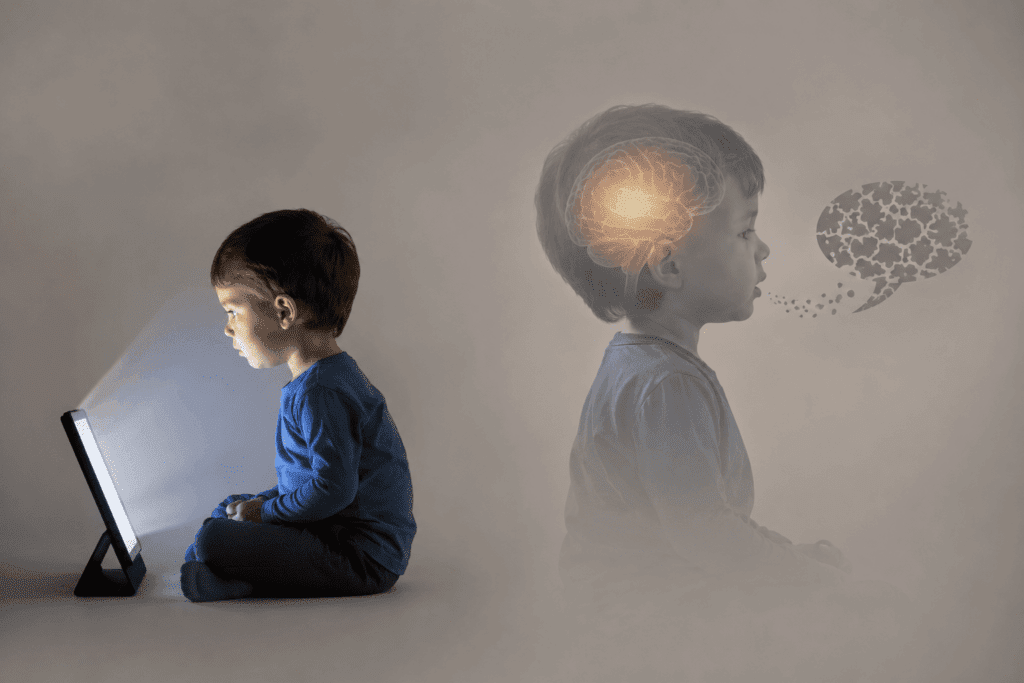
What Is Speech Delay?
Speech delay means a child is not talking as much or as clearly as other kids their age. It does not always mean something is wrong. Some children just take longer. But when a child misses key milestones, it is worth paying attention.
Here are some basic speech milestones to know:
✓ By 12 months — most babies say at least one word like “mama” or “dada.”
✓ By 18 months — most toddlers say around 10 to 20 words.
✓ By 24 months — most children can say about 50 words and start joining two words together.
✓ By 36 months — most kids speak in short sentences and strangers can understand much of what they say.
If your child is missing these milestones, talk to your doctor. Early help makes a big difference.
How Children Learn to Talk
Before we look at screens, it helps to understand how speech develops. Children do not learn to talk from hearing words alone. They learn through back-and-forth interaction with real people.
Think about what happens when a parent talks to a baby. The baby makes a sound. The parent responds. The baby looks at the parent’s face. The parent smiles and says more words. This goes back and forth many times a day.
| 🔁 What Is Serve and Return?Experts call back-and-forth interaction between a parent and child “serve and return.” Every time an adult responds to a child’s sounds, smiles, or gestures, the child’s brainbuilds new language links. This process is one of the most powerful drivers of earlyspeech development — and screens cannot do it. |
Real conversation also teaches children things a screen cannot. Children learn how to take turns in a talk. They learn to read facial expressions. They learn the rhythm of speech. They pick up on tone of voice. All of this requires a real, live person who responds to them.
How Screens Get in the Way
Screens are a one-way flow of words and sounds. A video cannot respond to your child. It does not notice when your child looks away, laughs, or tries to talk back. This is the core of the problem.
When a child spends time watching a screen instead of talking with a real person, they miss out on the serve and return moments that build language. Less serve and return means fewer brain connections for speech and language.
Here are the key ways screen time may slow speech development in toddlers.
1. It Replaces Real Conversation
Every hour a toddler spends in front of a screen is an hour they are not talking with a caregiver, a sibling, or a friend. This matters because the number of words a child hears from a real person has a direct impact on how fast they learn to speak.
Research has shown that children who hear more words from caregivers before age three develop larger vocabularies and stronger language skills later in school. Screen words do not count the same way. A toddler listening to a cartoon character is not getting the same benefit as a toddler talking back and forth with a parent.
2. It Discourages the Child from Trying to Talk
Screens are entertaining and easy. They demand nothing from a toddler. A child watching a screen does not need to communicate. They do not need to ask for anything. They do not need to respond.
Over time, some toddlers become passive. They get used to receiving without communicating. When the screen is off, they may find it harder to engage and express themselves. The habit of not needing to talk gets reinforced day after day.
3. It Creates a Loud, Fast Environment
Many children’s shows and apps are designed to be exciting. Bright colors, fast cuts, loud music, and non-stop talking fill the screen. This type of content moves too fast for a toddler to process.
Research shows that background television, even when a toddler is not watching directly, reduces the number of words parents speak to their child. When the TV is on, parents talk less. Adults also interrupt their conversations more often. The result is fewer real conversations and less language input for the child.
4. It Disrupts Attention
Toddlers need to focus to learn language. A fast-moving screen trains the brain to expect constant change. This makes it harder for young children to focus on slower activities like listening to a story, playing pretend, or having a conversation.
Poor attention is closely linked to slower language growth. A child who cannot hold focus long enough to follow a back-and-forth exchange will struggle to pick up language the way they should.
What Does the Research Say?
So, can screen time cause speech delay in toddlers? Research says yes — and the numbers are striking. Several studies have looked at this link in young children, and the findings point in a clear direction.
| 🔬 Key Research Findings• JAMA Pediatrics: Every 30-minute increase in daily screen time raised toddlers’ risk of speech delay by 49%. A very large effect for a small increase in screen use. • Canadian Study (2,400+ children): More screen time at 18 and 24 months was directly linked to lower communication scores. • Video Deficit Effect: Toddlers learn words far better from a real person than from a screen — even when the same word is shown in both settings. • AAP: Children learn language best through face-to-face interaction. Educational videos and apps do not teach language to toddlers as well as real people do. |
One often-cited example is a study called the video deficit effect. Toddlers shown a word on a screen and then shown the same word by a real person learn the word much better from the real person. This shows that the human element is not just helpful. It is essential.
Is Educational Content an Exception?
Parents who ask “can screen time cause speech delay in toddlers?” often follow up with: “What if it is educational content?” The honest answer is: a little better, but not by much for very young children.
Some content designed for older children, like preschoolers aged three to five, can support vocabulary when a parent watches and talks about it together. But for children under two, almost no screen content has been shown to improve language skills.
The American Academy of Pediatrics recommends no screen time at all for children under 18 months, with the sole exception of video calls. Video calls are different because a real person on the other end responds to the child. That back-and-forth is what makes it valuable.
After 18 months, limited and supervised screen time with a parent present can be okay. But solo screen time at a very young age continues to carry risks for language development.
Signs Screen Time May Be Affecting Your Toddler’s Speech
It is not always easy to tell if screen time is a factor. Every child is different. But here are some signs to watch for.
• Your toddler prefers screens over playing or talking with people.
• They make fewer sounds or words than other children their age.
• They seem to tune out or not respond when you talk to them.
• They are calmer with a screen than in any other situation.
• They do not point at things to get your attention.
• They rarely make eye contact during play or conversation.
• They seem frustrated when they cannot get what they want because they do not have words for it.
If you see several of these signs together, you may be seeing the real answer to “can screen time cause speech delay in toddlers?” in your own home. It is worth reducing screen time and speaking with your child’s doctor.

What Parents Can Do
The good news is that language delay linked to screen time is often reversible. When parents reduce screens and increase face-to-face interaction, many children catch up quickly. Here is what you can do.
• Talk to your child all day long. Narrate what you are doing. Say things like, “Now we are washing the dishes. The water is warm. See the bubbles?” The more words they hear from you, the better.
• Read together every day. Reading aloud to toddlers is one of the most powerful tools for language growth. Point at pictures, name them, ask simple questions, and let your child respond however they can.
• Limit screens by age. No screens for children under 18 months except video calls. One hour a day maximum for children aged two to five, and only with a parent present to talk about what they see.
• Put the phone down when with your child. Research shows that when parents use their own phones, they talk to their children less. Even a few minutes of parent phone use during playtime reduces language input significantly.
• Play without a script. Let your child lead playtime. Follow their gaze. Name what they look at. Respond to every sound they make as if it is a word. This builds the serve and return loop that is critical for language development.
• Sing songs and say nursery rhymes. Music and rhythm are deeply tied to language learning. Simple songs expose toddlers to patterns of sound and meaning in a fun, repeated way that the brain loves.
• Seek help early if you are worried. If your child is missing milestones, do not wait. Speech therapy, when started early, can make a significant difference. Early action is always better than waiting to see.
• Track and limit screen time at home. If you need a simple tool to stay consistent, the Unkeyme app is available on the App Store and Google Play, and it helps families set daily limits and build healthier habits without the daily struggle.
Conclusion
Can screen time cause speech delay in toddlers? The answer is: it can, and the risk is real — especially in the first three years of life when language is growing the fastest. Screen time alone does not always cause delay, but too much of it gets in the way of the real conversation and face-to-face time that young brains need most to learn to talk.
The best thing you can give your toddler is not an educational app. It is you. Your voice, your face, your responses, and your time are the most powerful language tools in the world.
Start small. Cut back on screens a little each day. Talk more. Read more. Play more. You will likely be amazed at how quickly your child responds.
To understand the full picture of how screens affect your child beyond speech, read our complete guide on the effects of screen time on children covering brain, behavior, and health. Visit Unkeyme.com for more tools and tips to raise a healthy, thriving child in a digital world.
Frequently Asked Questions
Can educational videos help toddlers learn to talk?
Educational content may help older preschoolers when watched together with a parent, but studies show that children under two learn language far better from real people than from screens.
What is the “video deficit effect”?
The video deficit effect is a research finding showing that toddlers learn words and concepts more effectively from live human interaction than from videos or screens, even when the content is the same.
Does background TV affect speech development?
Yes. Research shows that background television reduces the amount of conversation between parents and children. Parents tend to speak less and interrupt interactions more often when the TV is on.