
Follow us on:
How Screen Time Affects Brain Development in Children

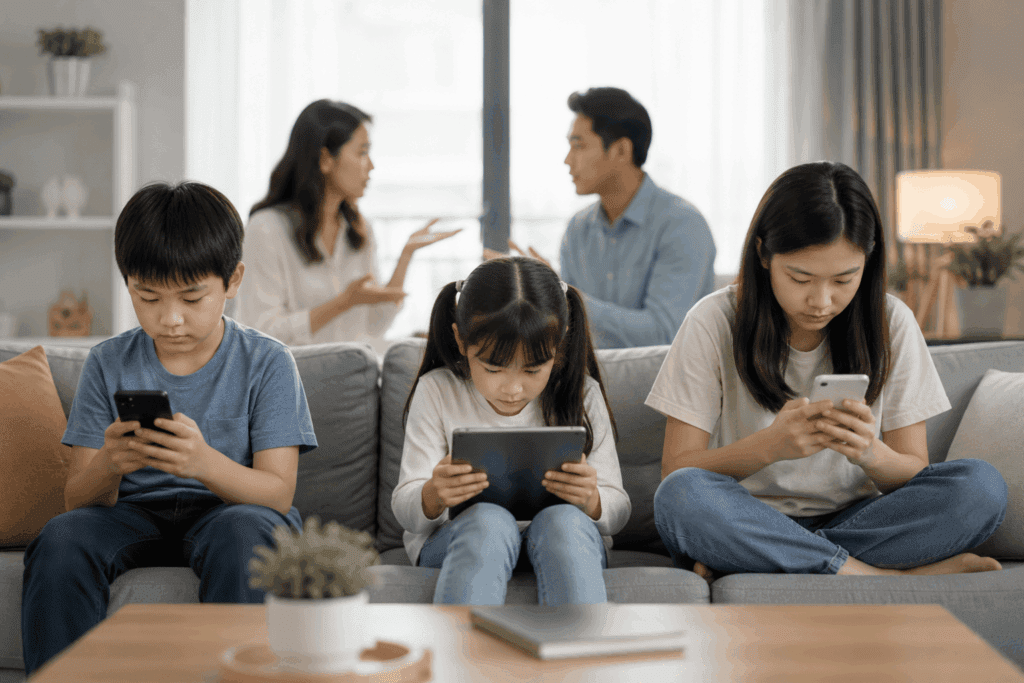
Understanding how screens affect child brain development is important for every parent in today’s digital world. The brain is the most complex organ in the human body, controlling everything a child thinks, feels, and does. It also develops more rapidly during the early years than at any other stage of life. Daily experiences shape how the brain grows, including the amount of screen time a child has.
This article, published on Unkeyme.com, explains what happens inside a child’s brain when they spend too much time on screens. It also covers what parents can do to protect their child’s brain during these key years of growth.
How the Brain Grows in Early Childhood
The brain grows at its fastest pace from birth to age five. During this time, billions of brain cells form new links with each other. These links are called neural connections. The more a child explores, plays, and talks with others, the stronger these links become.
Think of it like building a road network. Every new experience adds a new road. The more roads a child builds early on, the better their brain works later in life. But if key roads are never built, the brain may struggle with certain skills for years to come.
After early childhood, the brain keeps growing through the teen years. The front part of the brain, called the prefrontal cortex, is the last to fully develop. It handles things like focus, planning, self-control, and making good choices. This part is not fully formed until the mid-twenties.
This means children and teens are in a long window of brain growth. What they do and see during this time matters a lot.
What Screens Affect Child Brain Development
Screen time affects the brain in several key ways. Let us look at each one.
1. It Reduces Face-to-Face Interaction
Young children learn by talking and playing with real people. When a parent reads to a child, plays with them, or just talks during dinner, the child’s brain is highly active. It processes language, emotions, and social cues all at once.
Screens cannot replace this. A video cannot respond to a child’s smile. An app cannot adjust to what a child is feeling in the moment. When screen time takes the place of real interaction, the brain misses out on the rich input it needs most.
Research shows that the number of words a child hears from a real person before age five has a direct impact on their vocabulary and language skills later in school. Screen speech does not have the same effect because it is one-way and does not respond to the child.
2. It Overstimulates the Brain
Fast-moving videos and games flood the brain with a lot of input in a very short time. Bright colors, quick cuts, loud sounds, and constant action all fire off signals in the brain at a rapid pace.
At first, this feels exciting. But over time, the brain gets used to this high level of input. Slower activities, like reading, drawing, or listening in class, then feel dull by comparison. The brain starts to crave the fast-paced rush it gets from screens.
This is one reason why many children who spend a lot of time on screens find it hard to sit still, focus in school, or enjoy quiet play. Their brains have been trained to expect constant stimulation.
3. It Affects White Matter in the Brain
White matter is the part of the brain that connects different regions together. It acts like the wiring of the brain. Strong white matter means information flows fast and clearly between brain areas.
A study published in JAMA Pediatrics scanned the brains of young children. It found that those who spent more than one hour a day on screens had less developed white matter. This was linked to weaker language skills, slower thinking, and lower reading scores.
White matter development is closely tied to active learning and physical play. When screens replace these activities, white matter may not grow as fast or as strong.
4. It Triggers the Brain’s Reward System
Many apps and games are designed to keep children hooked. They use sounds, points, badges, and surprise rewards to trigger the brain’s reward system.
When a child gets a reward in a game, the brain releases a chemical called dopamine. Dopamine makes us feel good. The brain then wants more of that feeling. This is the same system that drives habits and, in some cases, addiction.
Over time, children may need more and more screen time to feel the same level of satisfaction. This can make it harder for them to enjoy other activities that offer slower, quieter rewards, like finishing a puzzle, reading a book, or helping a friend.
5. It Slows Down the Prefrontal Cortex
The prefrontal cortex is the part of the brain that helps children think before they act. It helps them manage emotions, solve problems, and make good choices.
This part of the brain develops slowly and needs the right experiences to grow well. It grows best through activities that challenge the mind, like play, conversation, reading, and hands-on learning.
Too much passive screen time, where a child just watches without thinking or interacting, does not give the prefrontal cortex the workout it needs. Some research even links very high screen time to a thinner cortex, which is associated with lower scores on thinking and attention tests.
Screen Time and the Teen Brain
The teen years bring a second wave of major brain development. The brain goes through a process of pruning, where links that are not used are cut away and the ones that are used often get stronger.
This means that what a teen spends time on during these years gets wired in more deeply. If a teen spends hours on social media and video games, those pathways get reinforced. Skills like deep reading, face-to-face conversation, and focused thinking may get less practice and become weaker over time.
Social media also puts stress on the teen brain. Seeing negative comments, comparing oneself to others, or waiting for likes can trigger anxiety and lower self-esteem. These emotional responses become a cycle that is hard to break.
Research has found that teens who spend more than three hours a day on social media are at higher risk of depression and anxiety. Girls tend to be more affected than boys, though the risk is real for all teens.
Active vs. Passive Screen Time
Not all screen time is equally harmful. There is an important difference between active and passive screen use.
| Active vs. Passive Screen Time: What’s the Difference? 🔴 Passive screen time: Watching videos, scrolling feeds, with no real thought or response. This has the most negative effect on brain development. 🟢 Active screen time: Video calls, educational apps, coding games, and creative tools. The brain is challenged and engaged. Effects are much less harmful. |
When a child uses a screen to build something, solve a puzzle, or talk with a grandparent, the brain is much more engaged. The effects are very different from passively watching one video after another.
This does not mean active screen time has no limits. But it does mean that the type of content and how a child uses it matters as much as the total amount of time. For a broader look at how screen habits shape your child’s behavior, health, and well-being, read our full guide on the effects of screen time on children.
Signs That Screen Time May Be Affecting Your Child’s Brain
Every child is different. But there are some common signs that screen time may be having a negative effect on brain development.
• Your child struggles to focus on tasks that do not involve screens.
• They get very upset or have meltdowns when screens are taken away.
• Their language skills seem slow compared to children of the same age.
• They show little interest in physical play, reading, or creative activities.
• They have trouble managing emotions or controlling impulses.
• They seem bored or restless when not in front of a screen.
If you see several of these signs regularly, it may be time to look closely at your child’s screen habits and make some changes.
What Parents Can Do
The good news is that the brain is flexible. It can adapt and grow when given the right input. Here are steps parents can take to support healthy brain development.
• Prioritize real-world play. Hands-on play, building, drawing, and outdoor activities are some of the best things for the developing brain. They build focus, creativity, and problem-solving in ways screens simply cannot.
• Talk and read with your child every day. Conversation and reading aloud are two of the most powerful tools for brain growth. They build vocabulary, improve attention, and strengthen the links between brain areas that handle language and emotion.
• Set clear screen time limits by age. Children under two should have very little screen time outside of video calls. Ages two to five should be limited to one hour a day of good content, watched together with a parent. Older children should have consistent daily limits.
• Choose active over passive content. When your child does use screens, pick apps and shows that ask them to think, respond, or create. Avoid fast-paced videos that offer little learning value.
• Create screen-free times and zones. Meals, bedtime, and family time should be free from screens. These moments are when some of the richest brain-building conversations happen.
• Be a role model. Children copy what they see. When parents put down their own phones and engage with their children, it sends a powerful message and builds a stronger connection.

Conclusion
The brain is not fixed. It is shaped by experience. Every screen a child watches and every game they play leaves a mark, for better or for worse.
The early and teen years are some of the most important windows of brain growth a child will ever have. What happens during these years can shape how they think, feel, and learn for the rest of their lives.
By understanding how screen time affects the brain, parents can make smarter choices about when, how, and how long their child uses screens. Small changes in daily habits can protect your child’s most important organ and give them the best possible start in life.
To learn more about the wider impact of screen time on your child’s behavior, sleep, and overall health, read our full guide on the effects of screen time on children. The Unkeyme app is available on the App Store and Google Play whenever you need it. Visit Unkeyme.com for more resources on raising healthy, happy kids in a digital world.
Frequently Asked Questions
1. How does screen time affect a child’s brain development?
Too much screen time can affect how a child’s brain grows and functions. Research shows it may reduce face-to-face interaction, overstimulate the brain, weaken attention skills, affect language development, and interfere with healthy growth in areas linked to focus, self-control, and decision-making.
2. Why are the early years so important for brain development?
A child’s brain grows fastest from birth to age five. During this period, billions of neural connections form based on what children see, hear, and experience. Activities like talking, reading, playing, and exploring help build strong brain pathways that support learning later in life.
3. Can screens replace human interaction for learning?
No. Children learn best through real-life interaction with parents, caregivers, and peers. Conversations, play, and emotional responses help develop language, social, and emotional skills in ways screens cannot fully replicate.