
Follow us on:
How Screen Time Affects Children’s Sleep Quality

Are you wondering how screen time affects sleep quality for your child? Sleep is one of the most important things for a child’s health. It helps the brain grow. It helps the body heal. It keeps kids in a good mood and ready to learn.
But many children are not getting enough sleep. One big reason is screen time. Phones, tablets, TVs, and games are keeping kids awake longer than they should be. This is something we cover in depth on Unkeyme.com, a resource built to help families raise healthier, more balanced children in a digital world.
This article looks at how screens affect sleep. We will also share simple steps parents can take to help their child sleep better every night.
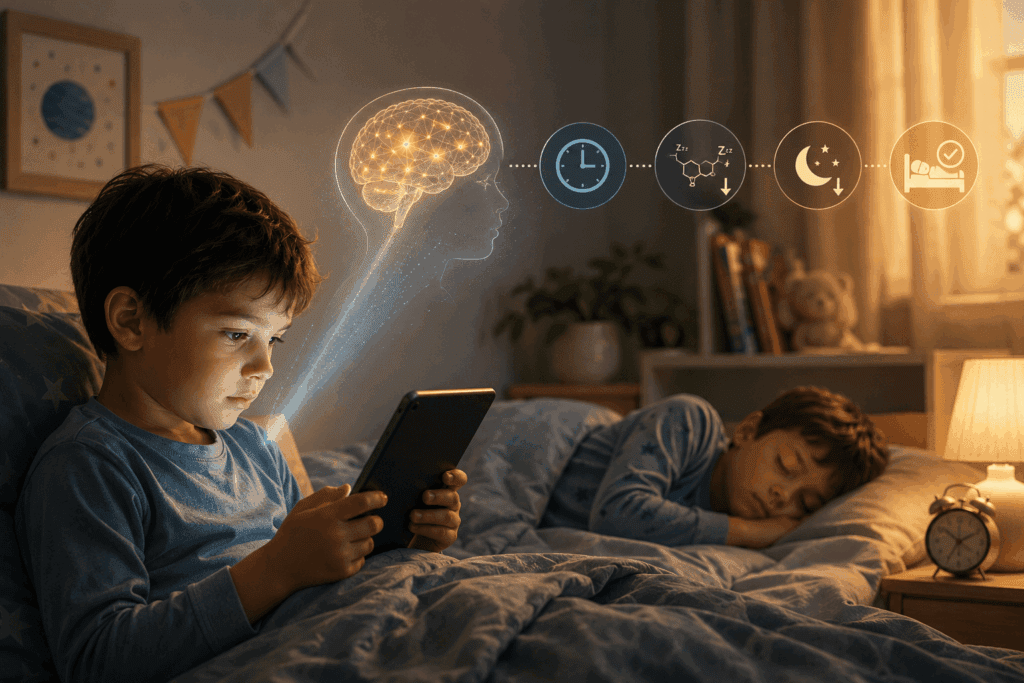
Why Sleep Matters So Much for Kids
Before we look at screens, let us talk about why sleep is so important for children.
During sleep, the brain sorts through the day’s learning. It stores new memories. It clears out waste that builds up during the day. Growth hormones are also released mostly during deep sleep.
Kids who do not sleep enough tend to have more trouble in school. They find it harder to focus. They get upset more easily. They may also get sick more often because sleep supports the immune system.
| How Much Sleep Does Your Child Need? (Per Night) • Ages 3 to 5 — 10 to 13 hours • Ages 6 to 12 — 9 to 12 hours • Ages 13 to 18 — 8 to 10 hours Source: American Academy of Sleep Medicine (AASM) |
Many kids today are falling short of these numbers. And screens are a major cause.
How Screens Disrupt Sleep
There are three main ways that screen time hurts sleep in children. Let us look at each one.
1. Blue Light Blocks Melatonin
All screens emit blue light. This type of light tells the brain it is daytime. It blocks the release of melatonin, which is the hormone that makes you feel sleepy.
When kids use screens in the evening, their brains think it is still daytime. Melatonin is delayed. The body is not ready to sleep even when bedtime comes.
Research shows that blue light from screens can delay melatonin release by up to 3 hours. This pushes back sleep time. Even if the child goes to bed on time, they may lie awake for a long time before falling asleep.
The brain is very sensitive to this. Even 30 minutes of screen use before bed can cause a delay. For young children, the effect is even stronger because their eyes let in more light than adult eyes do.
2. Stimulating Content Keeps the Brain Awake
Blue light is not the only problem. The content on screens also plays a big role.
Action games, exciting videos, and social media are all designed to keep you engaged. They trigger the brain’s alert system. Stress hormones like cortisol and adrenaline rise. The body goes into a state of high alert.
This is the opposite of what the body needs before sleep. To sleep well, the brain and body need to slow down. They need to feel calm and safe. Stimulating content does the opposite of that.
Kids who watch exciting content right before bed often find it hard to switch off. Their minds keep racing. They replay what they saw. They feel wired even when their body is tired.
Social media adds another layer. Teens who scroll through feeds before bed often feel anxious or upset. Seeing posts, comments, or messages can trigger strong emotions. These emotions are hard to let go of at bedtime.
3. Notifications and Late-Night Use
Many children keep their phones in their bedrooms at night. This means alerts, messages, and notifications can wake them up even after they fall asleep.
Each interruption breaks the sleep cycle. Deep sleep is the most healing stage. It is also the hardest to get back once lost. A child who is woken up by a phone alert at 1 AM may not reach deep sleep again for the rest of the night.
Some kids also wake up on their own to check their phones. This is especially common in teens. Studies show that around one in four teens wakes up at night to check social media or messages. Over time, this becomes a habit that is very hard to break.
What Happens When Kids Do Not Sleep Enough
Poor sleep does not just make kids tired. It has real effects on the brain and body over time.
Mood and Behavior
Sleep-deprived kids are more likely to be moody, reactive, and hard to manage. They may cry over small things. They may fight more with siblings or friends. Teachers often notice that tired kids have less patience and more conflict with peers.
This is because the brain’s emotional control center needs sleep to work well. Without enough rest, it struggles to keep emotions in check. If you find your child’s behavior getting harder to manage, it helps to look at both their sleep and their screen habits. Our guide on the effects of screen time on children’s brain, behavior, and health covers the wider picture in detail.
Focus and Learning
The brain needs deep sleep to move new learning into long-term memory. Kids who miss sleep forget more of what they learned in school. They also find it harder to focus in class the next day.
Over time, chronic sleep loss can cause real gaps in school performance. Research shows a clear link between poor sleep and lower grades, especially in reading and math.
Physical Health
Sleep is when the body does most of its repair work. Growth hormones are released during deep sleep. The immune system gets stronger. Tissues heal.
Kids who sleep poorly are more likely to gain weight. This is because lack of sleep raises the hormone that makes you feel hungry. They crave more food, especially sweet and fatty foods, and burn fewer calories.
Long-term sleep loss in children is also linked to a higher risk of high blood pressure and heart problems later in life.
Mental Health
There is a strong link between poor sleep and mental health problems in children. Anxiety and depression are more common in kids who do not sleep well.
This can become a cycle. Poor sleep makes anxiety worse. Anxiety makes it harder to sleep. Screens often sit at the center of this cycle, fueling both poor sleep and emotional stress.
Screen Time and Sleep: What the Research Says
Many studies have looked at the link between screen time and sleep in children. The findings are consistent.
A study in the journal Pediatrics found that kids who used screens within one hour of bedtime slept less and had worse sleep quality than those who did not.
Another large study looked at over 50,000 children. It found that any screen use at bedtime was linked to shorter sleep, more trouble falling asleep, and more tiredness the next day.
Research on toddlers shows that even background TV, meaning a TV on in the room that the child is not directly watching, can disrupt their sleep. The noise and light still register in the brain and interfere with wind-down time.
The effects are strongest when screens are kept in the bedroom. Kids with a TV or device in their room sleep less on average than kids who do not have screens in the bedroom.
Signs Your Child’s Sleep May Be Screen-Related
It can be hard to tell if screens are hurting your child’s sleep. Here are some signs to watch for.
- Your child takes a long time to fall asleep after bedtime.
- They wake up during the night.
- They feel tired in the morning even after a full night in bed.
- They are moody or hard to manage in the morning.
- They fall asleep at school or during the day.
- They resist bedtime and want to keep using their devices.
- They feel anxious or upset after using social media at night.
If you notice more than two or three of these signs on a regular basis, screens may be playing a role.

What Parents Can Do
The good news is that this problem is very manageable. Small changes to your child’s evening routine can make a big difference in sleep quality.
- Set a Screen Curfew. Stop all screen use at least one hour before bedtime. For younger children, two hours is even better. This gives the brain time to wind down and for melatonin to build up naturally. Be firm and consistent about this rule. Most families see better sleep within one to two weeks.
- Keep Screens Out of the Bedroom. When screens are in the bedroom, children are more likely to use them late at night and to be woken by alerts. Charge all devices outside the bedroom at night. Use an old-fashioned alarm clock instead of a phone so the phone does not need to be in the room.
- Create a Relaxing Bedtime Routine. Replace screen time with calm activities before bed. Reading a book, taking a warm bath, or listening to soft music all help the brain prepare for sleep. A good bedtime routine sends a clear signal to the body that sleep is coming.
- Use Night Mode and Screen Filters. If screens must be used in the evening, switch on night mode or a blue light filter. These settings reduce blue light output and lessen the impact on melatonin. This is not a full fix, but it helps if screens cannot be avoided entirely.
- Talk to Your Child About Why Sleep Matters. Children are more likely to follow rules when they understand the reason. Explain in simple terms why sleep is so important and how screens make it harder. Teens respond better when they feel informed rather than just told what to do.
- Use a Screen Time Management App. Managing screen time manually can be hard, especially with older kids who use multiple devices. The Unkeyme app makes it easy to set daily screen limits and schedule automatic screen-off times at night. Parents can access these tools anytime through the app available on the App Store for iPhone and Google Play for Android.
Conclusion
Screens are a big part of life today. They are not going away. But when it comes to sleep, too much screen time at the wrong time can cause real harm to your child.
The good news is that you do not have to take all screens away. You just need to set clear limits around when and where screens are used. Keep screens out of the bedroom. Set a screen curfew. Build a calming bedtime routine.
These steps are simple. But they can make a big difference in how well your child sleeps and how well they grow, learn, and feel every day.
If you want to learn more about how screens affect your child beyond just sleep, read our full guide on the effects of screen time on children’s brain, behavior, and health. For more tools and tips to help your family build healthy digital habits, visit Unkeyme.com.