
Follow us on:
Parenting Burnout Is Real

Parenting burnout can creep in without warning. One day you are managing just fine, and the next, even the smallest tasks feel impossible. You wake up already worn out. The kids need breakfast, the school bags need packing, and you are running on empty before the day has even started.
You love your family deeply. But right now, something feels very different from ordinary tiredness. If this sounds familiar, you may be dealing with parenting burnout, not just a rough week.
Parenting burnout is real. It affects parents from all backgrounds and all kinds of families. And it has nothing to do with how much you love your children. This article will help you understand what burnout actually is, how to spot it early, and what you can do to recover in a way that actually lasts.
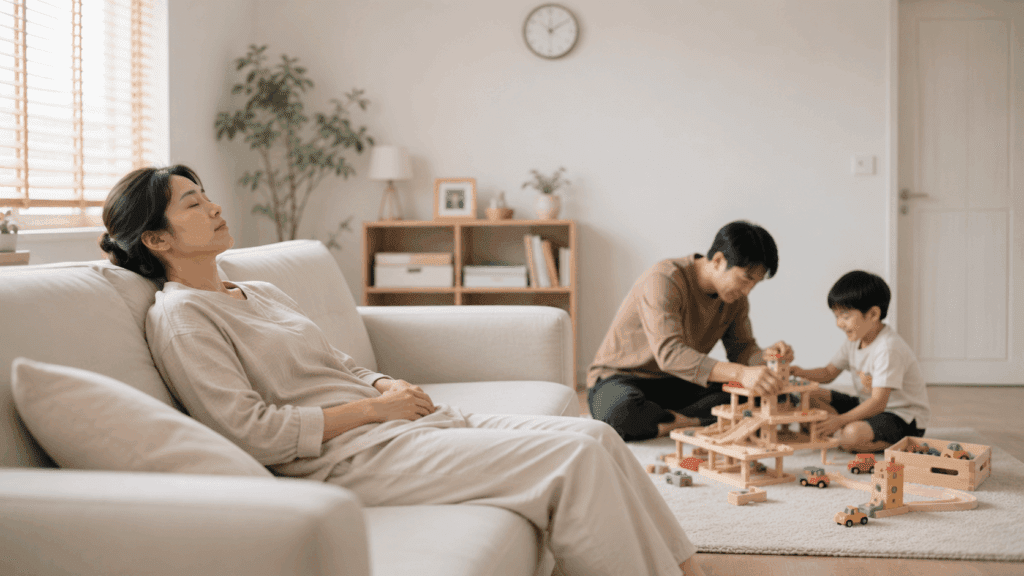
What Is Parenting Burnout?
Parenting burnout is not the same as having a hard week. It is what happens when you have been giving everything you have, for too long, with no real chance to rest and refill.
Think of it like a phone battery. If you keep using it without ever charging it, it eventually dies. That is what burnout feels like.
Parents are especially at risk because the job never stops. There is no clocking out, no sick days, and no quiet room to sit in. Over time, the weight of always being available wears you down, not in one big moment, but slowly, day by day.
Burnout builds quietly. Most parents do not notice it until they are already deep inside it.
Signs You Might Be Burned Out as a Parent
Burnout looks different for everyone. But there are common signs. See how many of these feel familiar.
You feel numb, not just tired
Tired feels heavy. Burnout feels hollow. You go through the day on autopilot. You make lunches, drop the kids off, and answer their questions, but you are not really present. It is not that you do not care. It is that you have run out of the energy to feel.
Small things set you off
You used to handle the daily chaos well. Now a dropped cup or a whining voice sends you over the edge. You snap at your kids over little things, then feel terrible about it, then snap again. This cycle of reacting and regretting is one of the most common signs of burnout.
You feel disconnected from your kids
You are in the same room, but you feel far away. You do not enjoy the moments you used to love. Bedtime stories feel like a task. Cuddles feel like an obligation. This emotional distance is painful, and it often makes parents feel like bad people. But it is not a character flaw. It is a symptom of burnout.
You think “I can’t do this anymore” and mean it
Every parent has a rough day and says this. But burnout is different. When you are burned out, that thought is steady. It does not go away after a good night of sleep. It sits with you, heavy and quiet, every single morning.
You have stopped taking care of yourself
You skip meals. You never exercise. You do not return calls from friends. Everything goes to the kids, or the house, or the job. You are last on the list. You have been last on the list for so long, you forgot you were on it.
You feel guilty all the time
Burnout and guilt travel together. You feel guilty for being tired. Guilty for snapping. Guilty for wanting a break. The guilt makes the burnout worse, and the burnout feeds the guilt. It is a loop with no easy exit.
You do not have to check every box. Even two or three of these signs are worth paying attention to.
Why Does Parenting Burnout Happen?
Burnout does not happen because you are weak. It happens because the demands are too high and the support is too low.
You are doing too much alone
Many parents carry the full load by themselves. Even in two-parent homes, one person often takes on most of the mental work, which includes the planning, the worrying, and the remembering. This invisible labor drains you just as much as the physical tasks do.
You were never taught to rest
Many parents grew up believing that rest is something you earn after finishing everything. But the list never ends. So rest never comes. And the mind and body pay the price over time.
The standard is impossible
Social media shows parents who look happy, organized, and calm. Their kids are well dressed. Their homes are clean. Their activities look crafted and fun. This is not real life. But it sets a standard that makes your real life feel like failure.
You have been saying yes for too long
To every request. Every event. Every task. Every need. You said yes to everyone but yourself. And eventually, there was nothing left to give.
How to Actually Recover From Parenting Burnout
Recovery does not happen overnight. But it does happen if you take it seriously. Here is what actually works.
Name it
Say it out loud: “I am burned out.” This matters more than it sounds. When you name something, you stop pretending it is not there. And that is the first step toward change. You do not need to have all the answers right now. You just need to be honest with yourself.
Lower the bar on purpose
Not forever. Just for now. Give yourself permission to do less. Let the dishes wait. Order takeout. Say no to the school bake sale. Good enough is good enough when you are running on empty. Your kids need a present parent far more than a perfect one.
Find 20 minutes a day that belong to you
Not 20 minutes to clean. Not 20 minutes to prep dinner. Twenty minutes that are only yours. Walk around the block. Read a few pages. Sit in a quiet room. Make coffee and drink it while it is still hot. This is not selfish. This is how you stay functional.
Talk to someone
Burnout gets heavier when you carry it alone. Talk to a friend. Tell your partner what is really going on. See a therapist if you can. Join a parent support group, whether online or in person. You do not need to have it figured out before you talk. Just start talking.
Track how you are feeling
One thing that genuinely helps with burnout is seeing your own patterns. When do you feel worst? What drains you the most? What gives you even a small boost? Tracking your emotional state helps you answer these questions. And when you can see the patterns, you can start to change them.
The UnKeyMe app was built for exactly this. It gives you a simple, private space to log how you feel each day. No pressure. No judgment. Just a clear picture of what is going on inside. Download it on iOS or Android and start checking in with yourself.
Ask for help and accept it
This is the hardest step for most parents. Asking for help feels like admitting failure. It is not. It is the most practical thing you can do. Let a family member take the kids for a few hours. Accept a friend’s offer to bring dinner. Ask your partner to handle bedtime for a week. You do not have to do this alone. You were never supposed to.
How to Stop Burnout Before It Comes Back
Once you have started to recover, the goal is to keep burnout from returning. Here is what helps over the long term.
Set limits and hold them
Say no to things that drain you with no return. This includes over-scheduled weekends, extra commitments, and people who take without giving back. Your time and energy are limited. Spend them on what matters most.
Build rest into your week, not just the weekend
Rest should not be a reward. It should be a regular part of your schedule. Even one morning a week where the pace is slower can make a real difference. Rest is maintenance, not laziness.
Check in with yourself regularly
Do not wait until you hit a wall to notice how you are doing. A quick daily check-in, even just asking yourself how you really feel, keeps you aware before burnout sneaks back in.
Apps like UnKeyMe make this easy. A short daily log takes less than a minute and helps you stay ahead of the spiral. Available on App Store and Google Play.
Talk about it before it gets bad
Do not wait until you are empty to tell your partner or support network how you are feeling. Regular, honest conversations about how parenting is going, including the hard parts, keep small stresses from turning into big ones.

You Are Not a Bad Parent for Feeling This Way
Let’s be clear about something. Burnout is not proof that you do not love your kids. It is proof that you have been loving them without enough support.
The parents who burn out are usually the ones who tried the hardest. Who cared the most. Who said yes for too long because they could not stand to let anyone down. That is not a flaw. That is love under too much pressure.
You deserve to get help. You deserve to rest. You deserve to feel like a person, not just a parent.
Taking care of yourself is not taking something away from your kids. It is one of the most important things you can give them.
Frequently Asked Questions
How long does it take to recover from parenting burnout?
It depends on how long you have been burned out and how much support you have. For some parents, a few weeks of rest and less pressure makes a real difference. For others, especially those who have been burned out for months, recovery takes longer. The key is not to rush it. Small, steady changes add up. And the earlier you start, the faster you will feel like yourself again.
Can parenting burnout affect my kids?
Yes, and that is exactly why it is worth taking seriously. When a parent is burned out, they are less patient, less present, and less able to connect emotionally. Kids pick up on this. They may become more anxious, more clingy, or act out more. This is not about blame. It is about cause and effect. When you recover, the whole family benefits. Getting help is one of the best things you can do for your children.
Is parenting burnout the same as depression?
They overlap, but they are not the same thing. Parenting burnout is tied specifically to the demands of raising children. If you stepped away from parenting responsibilities for a week, you would likely start to feel better. That is a sign it is burnout. Depression is broader. It affects all areas of life, not just parenting, and it does not lift with rest alone. If you are not sure which one you are dealing with, talk to a doctor or therapist. Both are real. Both deserve care. And you do not have to figure it out alone.
This article is part of our complete guide: Everyday Parenting Challenges: The Complete Guide to Stress, Burnout, and Raising Kids Without Losing Yourself. Explore our other guides on How to Stay Calm as a Parent and Why Kids Resist Rules.